
Riverton Foundation Pros
Piering and Underpinning in Draper, UT
Piering and underpinning in Draper, UT uses steel push or helical piers to stop foundation settlement, with free written estimates before any digging.
- 15+ Years local experience
- 500+ Projects completed
- Licensed & Insured
Serving Draper and nearby communities.
Piering and underpinning adds support beneath a foundation that's settling, lowering steel piers to load-bearing soil or bedrock instead of leaving the footing to ride on compacting fill. It's a different job than crack repair: cracks get sealed, settlement gets stopped at the source. On Draper's graded hillside lots, fill soil placed during construction keeps compacting for years, and that slow compaction is usually what's pulling a corner of the foundation down.
Riverton Foundation Pros scopes every underpinning job with a load assessment first, then recommends push piers or helical piers based on what the soil actually does at depth, not a one-size quote. Every estimate lists pier count and placement before a single hole gets dug.
What's included
What's included with Piering and Underpinning
Typically included: Optional: Customer prep:
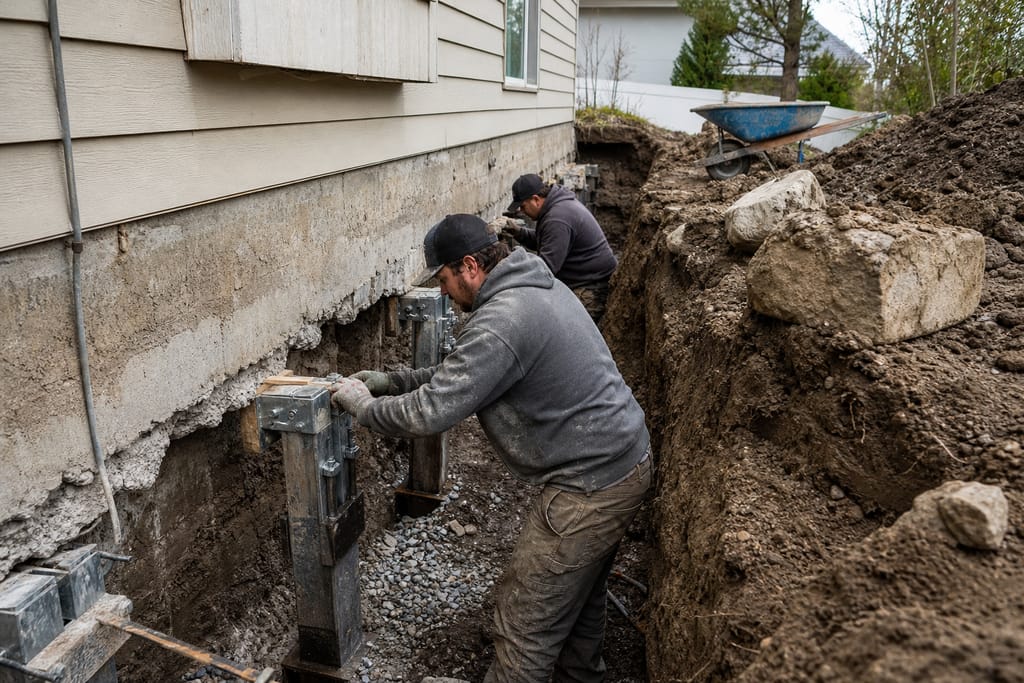
- Site excavation at each pier access point along the foundation
- Piers driven or screwed to stable bearing soil
- Load transfer brackets connecting piers to the footing
- Hydraulic lifting to recover settlement where possible
- Backfill and grade restoration at each access point
- Additional perimeter piers for full-foundation coverage
- Interior piers for slab support under load-bearing walls
- Clear a 3-4 foot access path along the affected foundation wall
- Move patio furniture, planters, or sprinklers away from the work zone
Want a clearer scope?
Get a Free EstimateHow it works
How our Piering and Underpinning process works
 Step 1
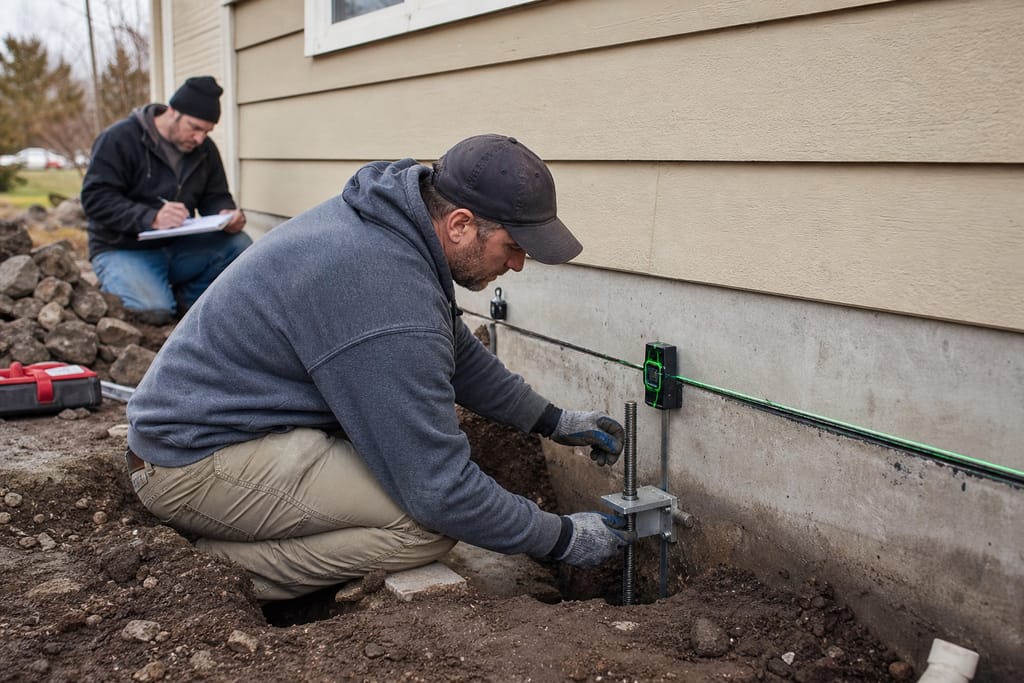
Load Assessment
The structure's weight distribution is analyzed to determine pier placement.
 Step 2
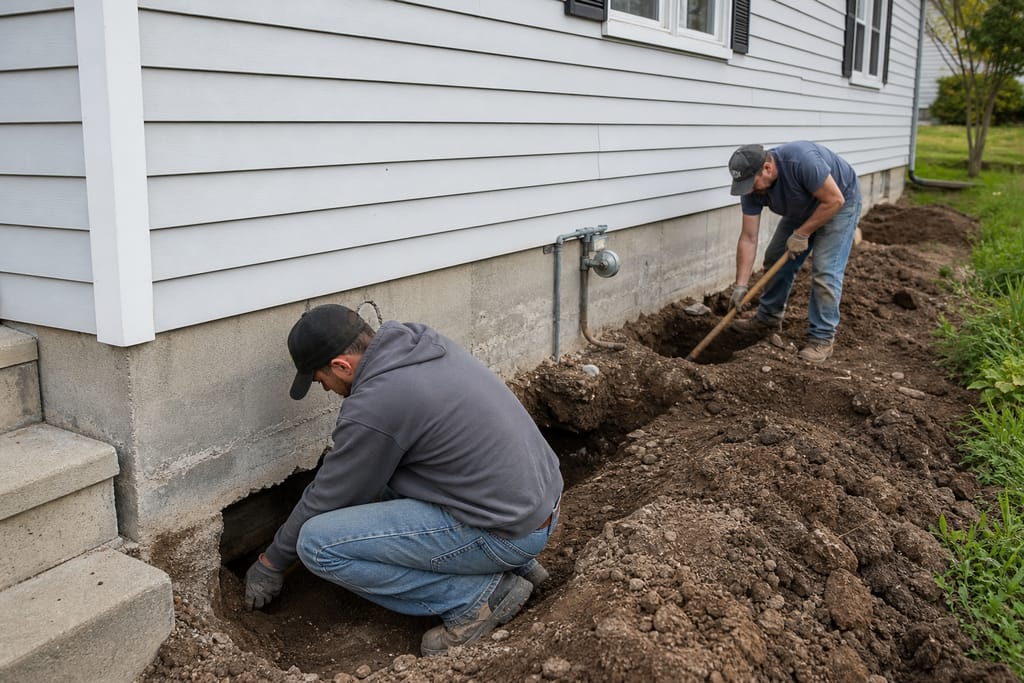
Access Excavation
Small excavation points are created along the foundation perimeter.
 Step 3
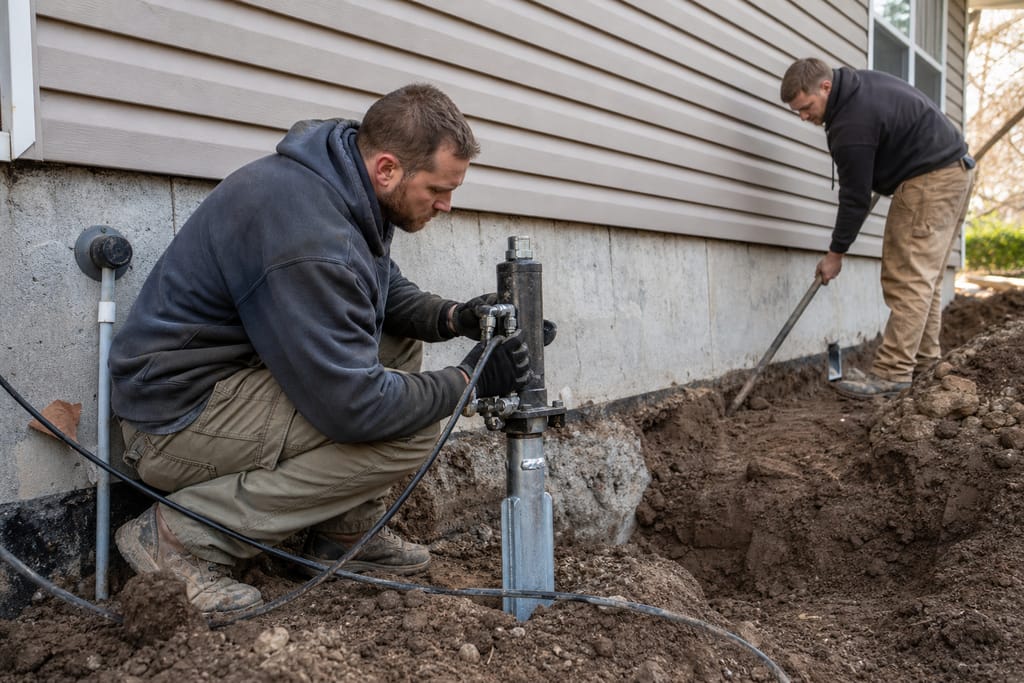
Pier Driving
Piers are driven or screwed into the ground until reaching stable strata.
 Step 4
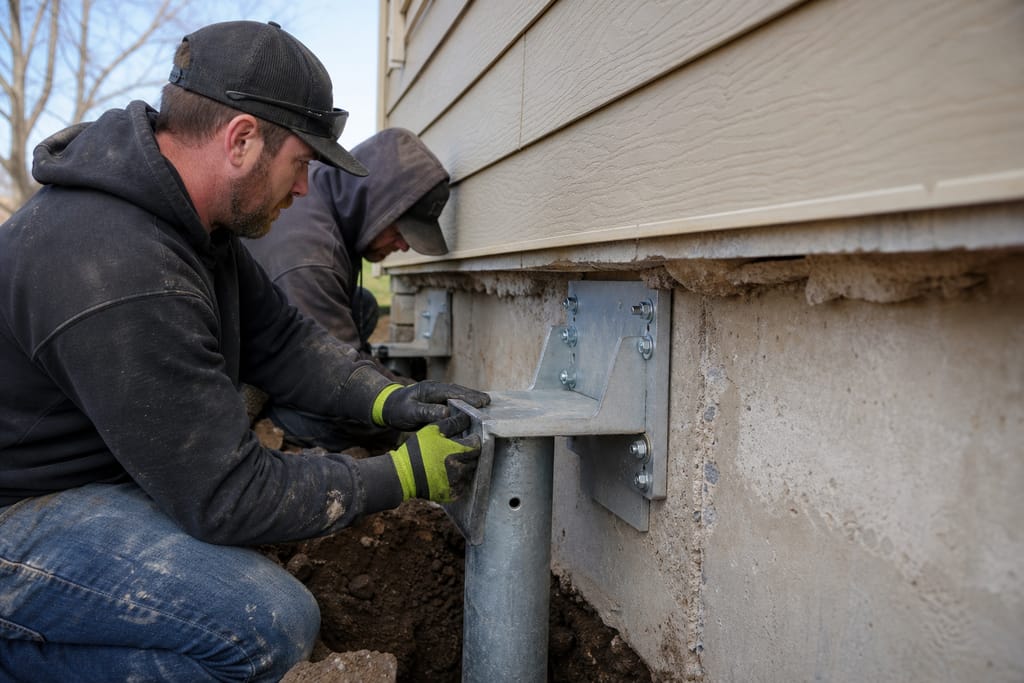
Load Transfer
Brackets connect the piers to the foundation to redistribute structural weight.
 Step 5
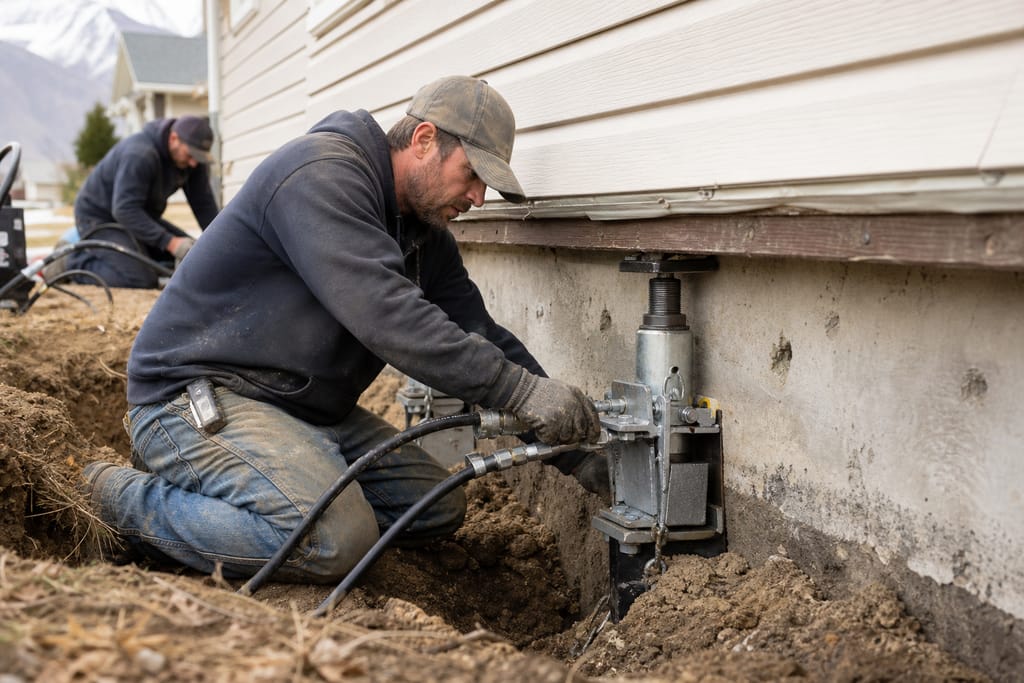
Leveling Adjustment
Hydraulic equipment carefully raises the foundation to its intended position.
 Step 6
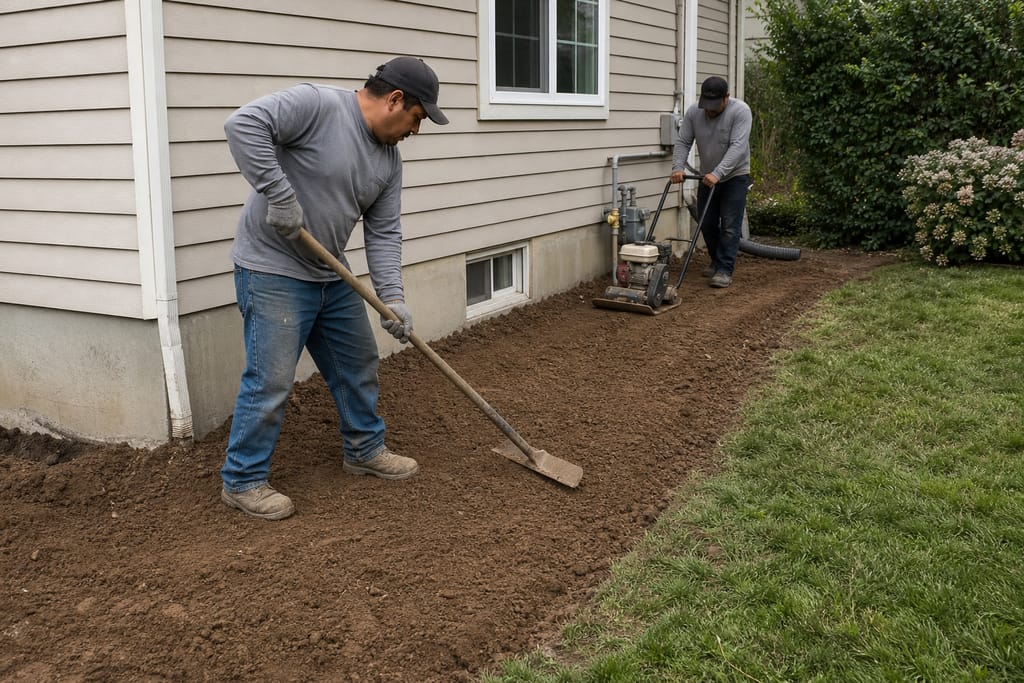
Site Restoration
Excavated areas are backfilled and compacted to match the original grade.
Materials
Materials and methods for Piering and Underpinning
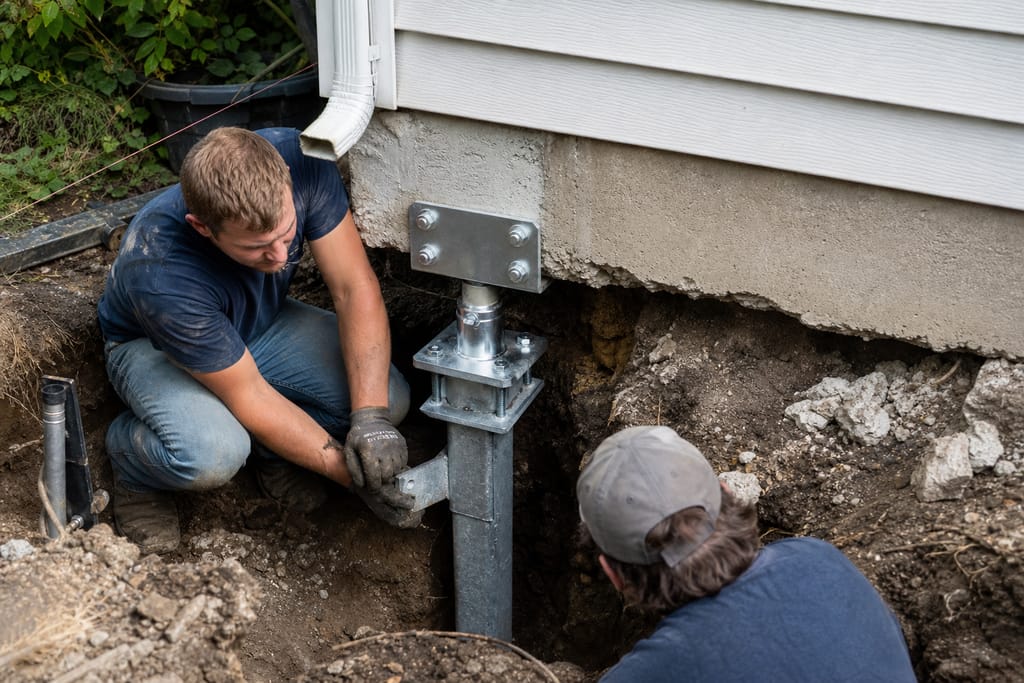
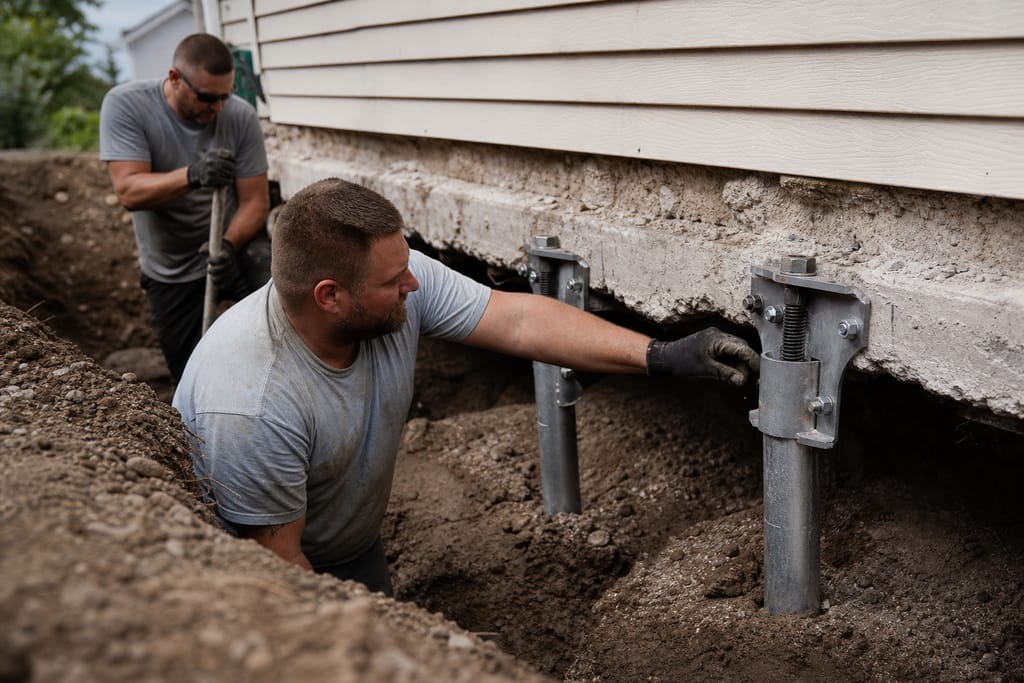
Steel Push Piers
Driven to load-bearing soil or bedrock, these carry heavier structural loads and work well on Draper's settling hillside fill.
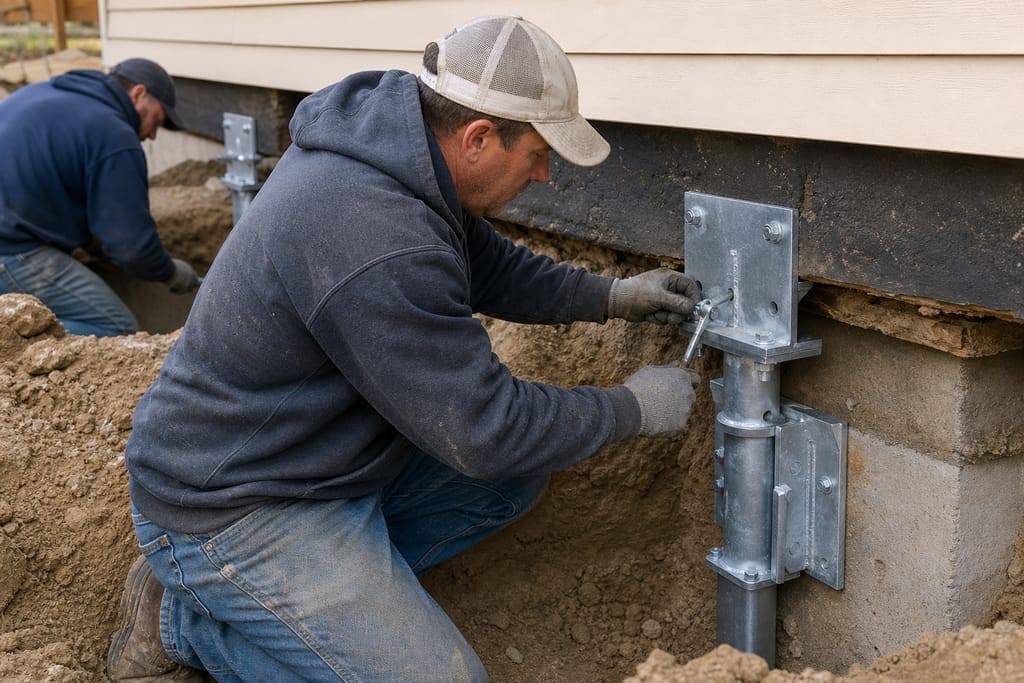
Helical Piers
Screwed into place with a torque reading that confirms bearing capacity, useful where access is tight or the structure is lighter.
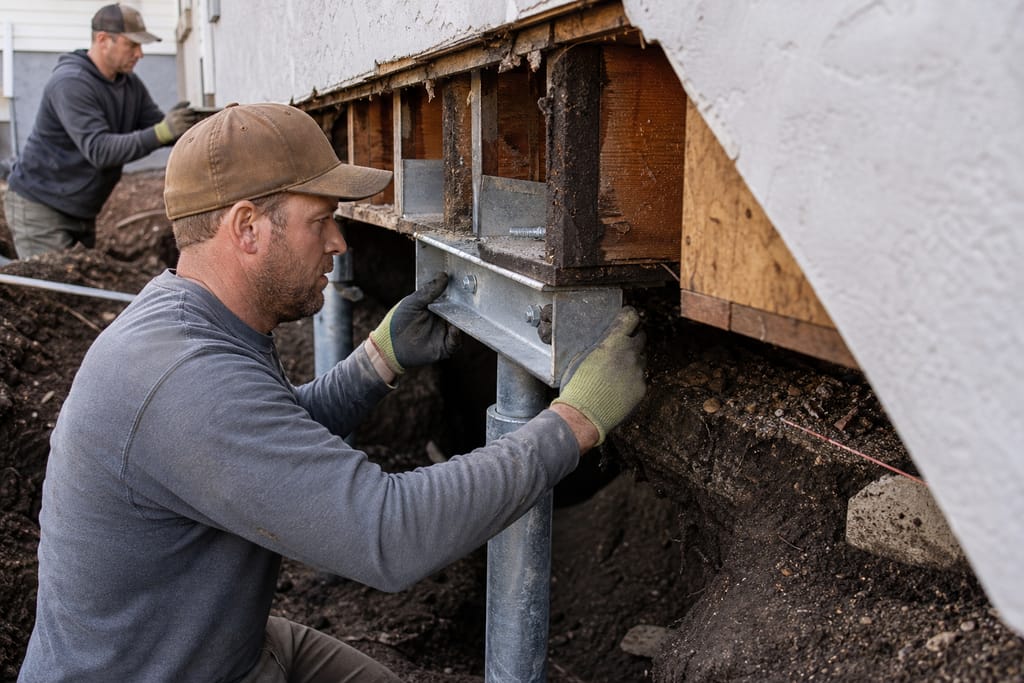
Underpinning Brackets
Connect piers to the existing footing so load transfers evenly instead of concentrating at one point.
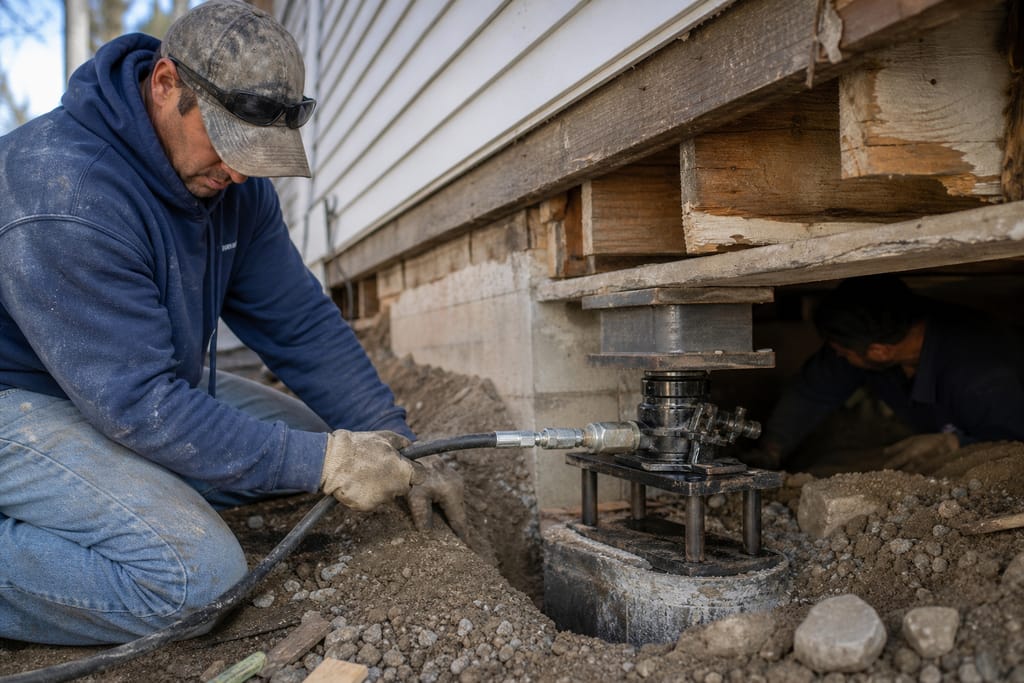
Hydraulic Lift Systems
Allow controlled, incremental lifting so the structure settles into position without new cracking.
Galvanized Coatings
Protect steel piers from corrosion in Utah's clay and sand soil mixes over the long run.
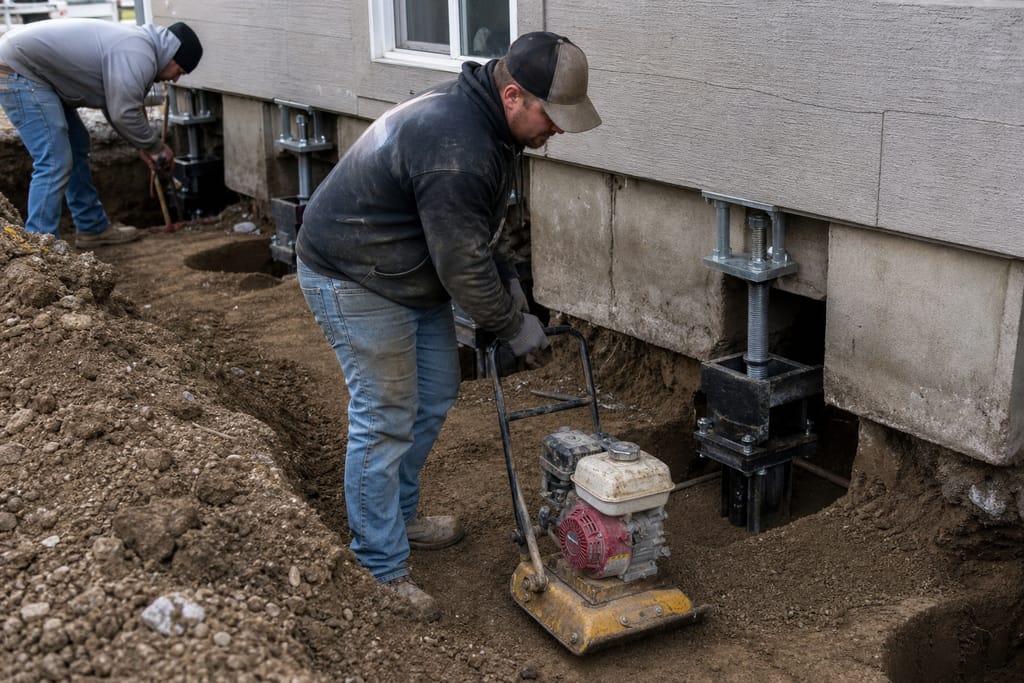
Compacted Fill Material
Packed back around installed piers so the surrounding soil doesn't shift again next season.
Questions on materials?
Get a Free EstimateTimeline
How long does a Piering and Underpinning take?
Most jobs run over a few days once the plan is set, with most of that time spent on installation rather than prep.
- 01
Consult and load assessment
same day - 02
Permit filing
1–2 weeksfor structural pier work
- 03
Pier installation
1–3 daysdepending on pier count
- 04
Leveling and load transfer
part of install day
- 05
Follow-up check
2–4 weeksafter completion
Need a schedule that fits?
Get a Free EstimateBefore & after
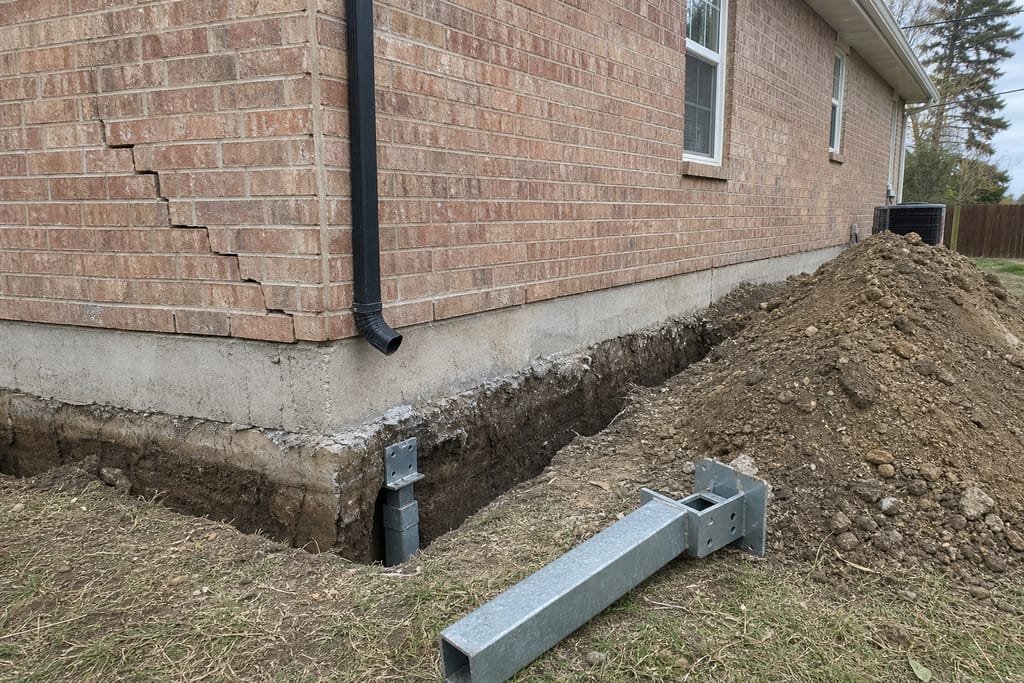
Before and after Piering and Underpinning results
Before 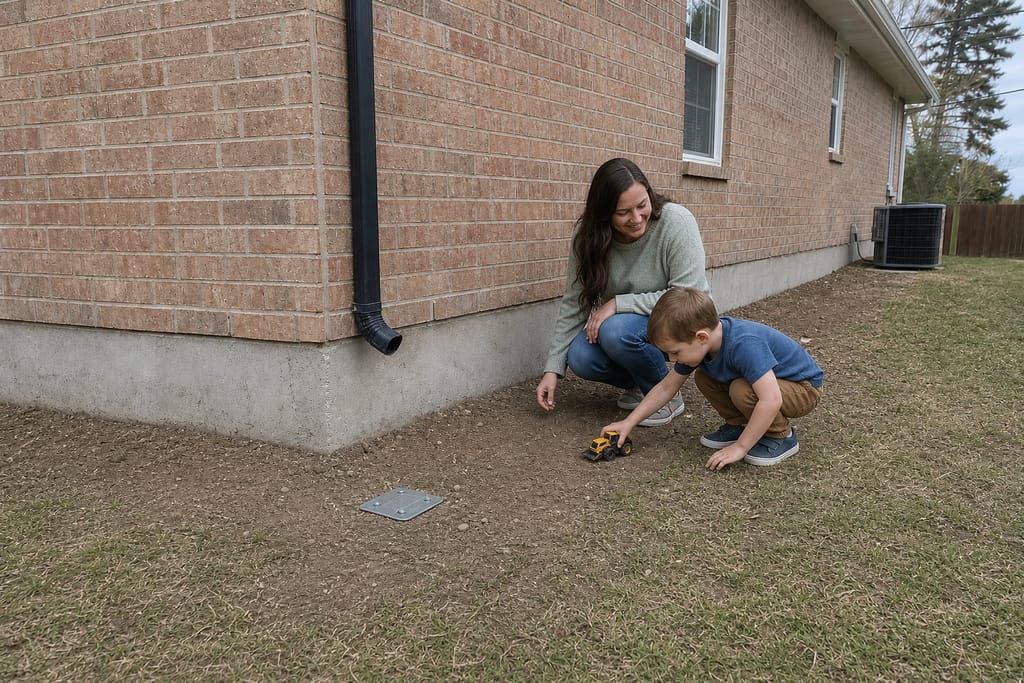
After
FAQs
Piering and Underpinning FAQs
How do I know if I need push piers or helical piers?
Push piers rely on the structure's own weight to drive them to bearing soil, so they're typically used on heavier homes. Helical piers are screwed in and rated by torque, which works well for additions, lighter structures, or tighter access points. We make the call after measuring load and testing soil resistance on site.
How long does foundation pier installation take?
Most residential jobs finish in one to three days depending on how many piers the foundation needs. Larger perimeter jobs with ten or more piers can run closer to a week.
How much does it cost to underpin a house in Utah?
Cost scales with pier count and depth more than house size. A single corner needing three or four piers costs far less than full perimeter underpinning, ask for a written estimate with pier count included.
Do I need a permit for piering and underpinning?
Yes, . Structural work like pier installation typically requires a permit from the local building department. We handle permit filing as part of the job.
Will piering stop my foundation from settling further?
Properly installed piers transfer the load to stable soil, which stops further settlement at that point. They won't reverse soil conditions elsewhere on the property, which is why a full perimeter assessment matters.
Next step
Get a Piering and Underpinning estimate in Draper
Call Riverton Foundation Pros at +1 (385) 600-7881 or request a free estimate. We'll assess load, soil, and pier count before quoting a number.
More services
Other Foundation Repair services
Foundation Repair
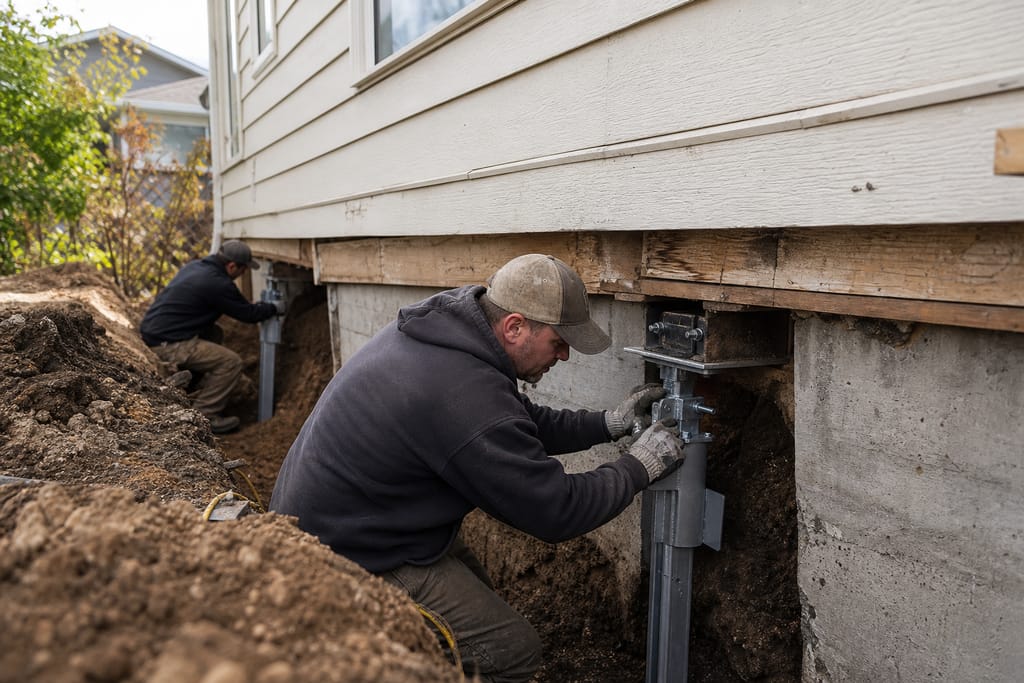
Foundation repair in Draper, UT: crack injection, piering, and wall stabilization with free estimates.
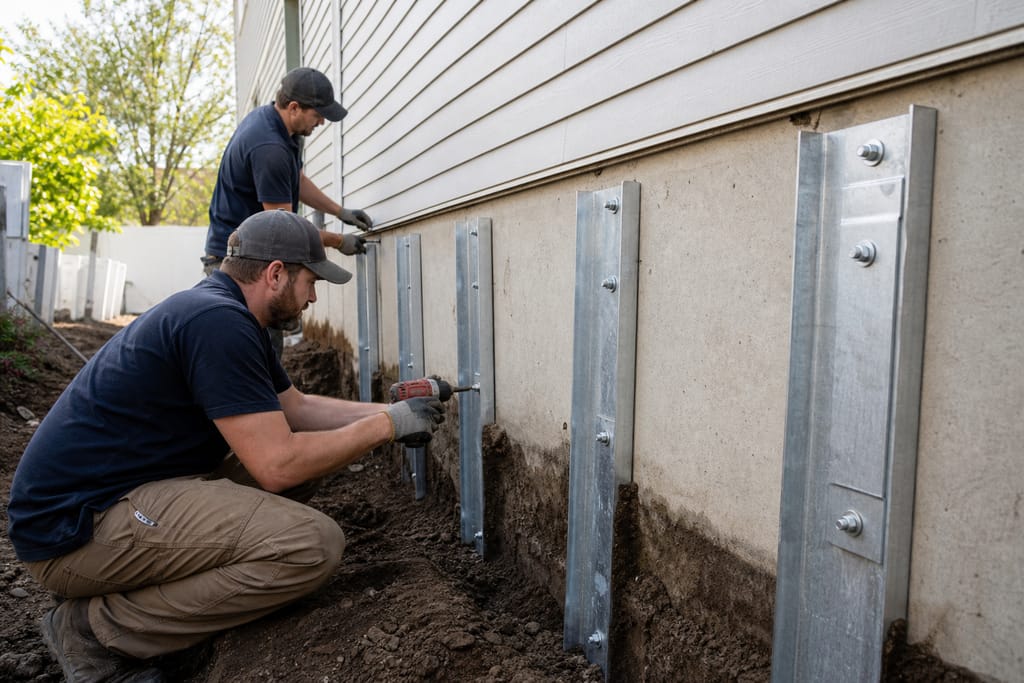
Wall Stabilization
Wall stabilization in Draper, UT uses steel anchors, carbon fiber straps, or I-beams to stop a bowing basement wall, with free estimates and written scope.
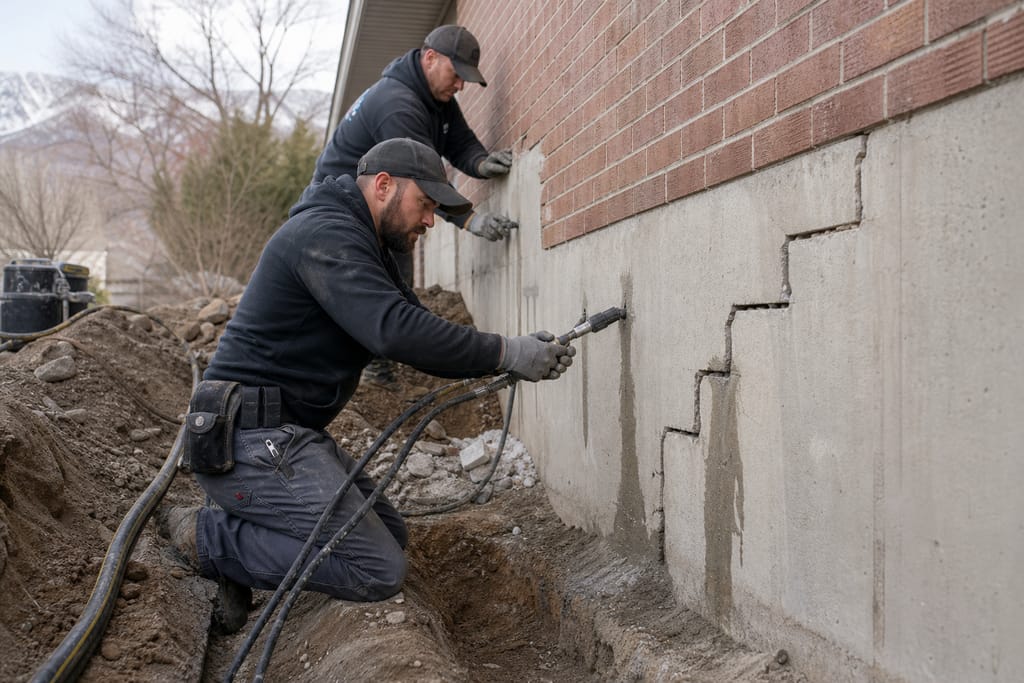
Foundation Crack Repair
Foundation crack repair in Draper, UT seals structural and leaking cracks with epoxy or polyurethane injection, with free estimates and same-day options.
Ask about Piering and Underpinning
Tell us about the project and how to reach you.